







Don Johnson Auto Group - How Much Cargo Space Does the 2027 Ford Explorer Offer for Eau Claire, WI SUV Shoppers?
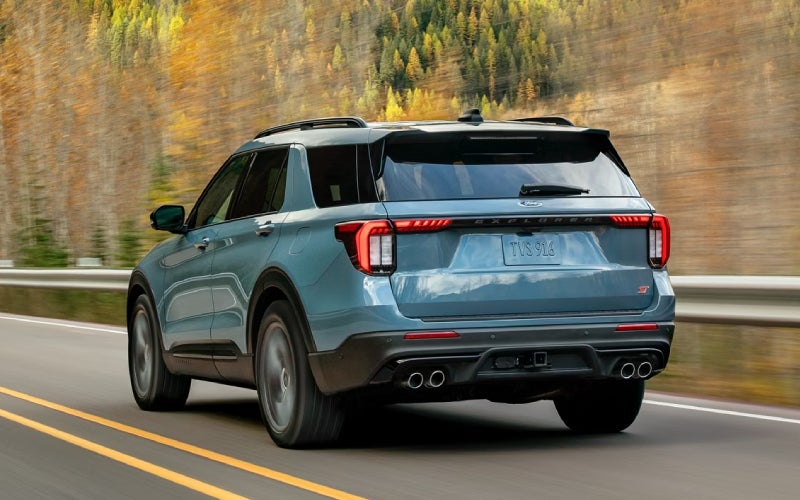
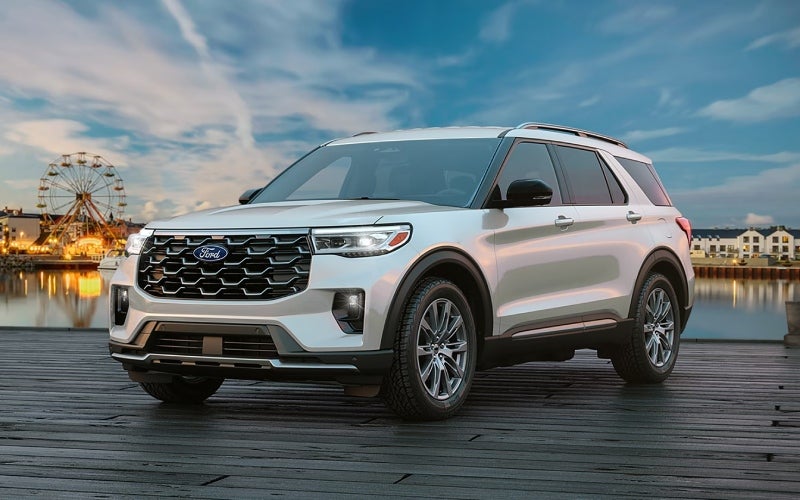
Choosing a three-row SUV often comes down to how well it handles real cargo needs, and the 2027 Ford Explorer® gives Eau Claire, WI area shoppers a practical, easy-to-use space for family gear, groceries, luggage, work supplies, outdoor equipment, and daily errands.
The key number to know is that the 2027 Ford Explorer® offers up to 85.8 cu ft of maximum cargo capacity on Active and ST-Line models. Tremor®, Platinum™, and ST models offer up to 85.3 cu ft of maximum cargo capacity. With all three rows in place, every Explorer® model provides 16.3 cu ft behind the rear seats. Those numbers make the Explorer® a strong option for shoppers who want the passenger flexibility of three rows without sacrificing the ability to carry bulky items when the seats are folded.
What the Cargo Numbers Mean in Daily Driving
Cargo specifications can feel abstract until shoppers connect the measurements to everyday life. With all seats upright, the space behind the third row is useful for shopping bags, backpacks, smaller luggage, sports equipment, pet supplies, or a stroller that folds compactly. For school drop-offs, grocery runs, and quick trips across town, that area keeps items contained without requiring any seating changes.
When the third row is folded, the Explorer® becomes much more flexible for larger loads. This is the configuration many families use most often when carrying four or five people plus extra gear. Fold both rear rows, and the SUV opens up its maximum cargo capacity, making it far easier to transport furniture pieces, camping gear, home improvement supplies, or luggage for longer travel. For Eau Claire, WI shoppers who split time between city errands, highway driving, and activities around nearby communities, that adaptability is a major advantage.
How Seating Layout Affects Practical Space
The 2027 Ford Explorer® is also helpful because it offers more than one passenger layout. Second-row captain’s chairs are standard on all models, creating a six-passenger configuration with a convenient pass-through to the third row. For many families, that setup makes third-row access easier and helps second-row passengers feel more comfortable on longer drives.
Shoppers who need seating for seven can choose an available second-row bench seat on all models except Tremor®. That added seat can be valuable for larger households, carpooling, or anyone who frequently carries extra passengers. The main decision is whether the open walkway of captain’s chairs or the added capacity of a bench better fits your normal routine.
- Captain’s chairs: Standard on all models and useful for easier movement to the third row.
- Second-row bench: Available on all models except Tremor® and increases seating capacity to seven.
- Third-row seating: Included on every Explorer® model for added passenger flexibility.
- PowerFold® third-row seats: Available on Tremor® and standard on ST and Platinum™ for easier cargo transitions.
That seating flexibility is one reason the Explorer® works well for shoppers who do not want to choose between people space and cargo usefulness. It can serve as a family vehicle during the week and convert into a gear-friendly SUV when cargo takes priority.
Comparing Cargo Space by 2027 Explorer® Model
The differences between Explorer® cargo ratings are small, but worth understanding. Active and ST-Line models provide the highest maximum cargo rating at 85.8 cu ft. Tremor®, Platinum™, and ST models provide 85.3 cu ft, which remains generous and highly usable. The difference is minimal in day-to-day use, so shoppers should focus just as much on the model’s purpose, technology, comfort, and performance personality.
- Explorer® Active: Up to 85.8 cu ft of maximum cargo capacity.
- Explorer® ST-Line: Up to 85.8 cu ft of maximum cargo capacity.
- Explorer® Tremor®: Up to 85.3 cu ft of maximum cargo capacity.
- Explorer® Platinum™: Up to 85.3 cu ft of maximum cargo capacity.
- Explorer® ST: Up to 85.3 cu ft of maximum cargo capacity.
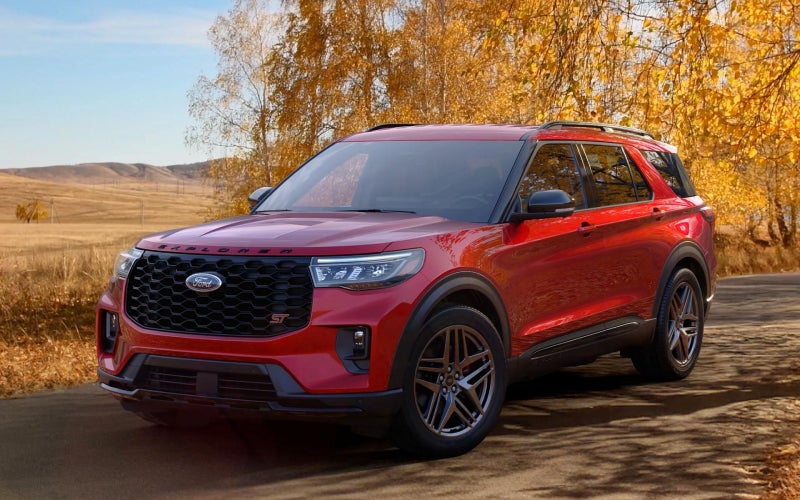
Active is a smart fit for practical shoppers who want strong value in the lineup’s core design. ST-Line adds a sportier look and added technology touches such as an available 360-degree camera and B&O® Sound System by Bang & Olufsen® with 10 speakers, including a subwoofer. Tremor® brings off-road-tuned suspension, increased ride height, underbody protection, and a Torsen® limited-slip rear axle. Platinum™ focuses on premium comfort with available heated, ventilated, massaging front-row seats with leather inserts. ST adds the lineup’s performance edge with the 3.0L EcoBoost® engine, sport-tuned suspension, and performance brakes with red-painted calipers.
Why Cargo Versatility Matters More Than One Number
Maximum cargo capacity is important, but the way an SUV transitions between passenger and cargo duties matters just as much. The Explorer® has a long, usable cargo area when the rear seats are folded, and the three-row layout allows drivers to choose the right balance for each day. Need to carry six people? Keep the seats up. Need room for equipment and only two passengers? Fold the rear rows. Need a mix of both? Fold only the third row.
For in-market shoppers, a test drive should include a hands-on cargo check. Bring a stroller, hockey bag, cooler, musical instrument case, pet crate, or anything else that regularly travels with your household. Online dimensions are useful, but seeing how your own items fit can make the decision much clearer.
- Measure your largest regular item: Check the length, width, and height before visiting.
- Test the third-row area: Confirm that everyday items fit with all seats upright.
- Fold the rear seats: See how easily the Explorer® changes from passenger mode to cargo mode.
- Check lift-in height: Make sure loading heavier items feels comfortable.
- Evaluate visibility: Confirm that cargo does not block your view when properly loaded.
This approach helps shoppers choose an SUV based on personal use rather than assumptions. A vehicle can look spacious online, but the right fit becomes obvious when real gear is involved.
Frequently Asked Questions:
Which 2027 Ford Explorer® model has the most cargo space?
The 2027 Explorer® Active and ST-Line offer the highest maximum cargo capacity at up to 85.8 cu ft. Tremor®, Platinum™, and ST models offer up to 85.3 cu ft. All models provide 16.3 cu ft behind the third row with all seats in place.
Does the 2027 Ford Explorer® have three rows?
Yes. Every 2027 Ford Explorer® model includes three-row seating. Second-row captain’s chairs are standard across the lineup, and an available second-row bench seat can increase capacity to seven on all models except Tremor®.
Is the Explorer® good for families who need both passenger and cargo room?
Yes. The Explorer® is especially practical for families because it can carry six or seven passengers, provide usable cargo room behind the third row, and expand significantly when one or both rear rows are folded.
Should cargo space be the main reason to choose a trim?
Cargo space should be part of the decision, but trim choice should also include comfort, technology, powertrain, and capability needs. Since the cargo ratings are close across the lineup, many shoppers can prioritize model personality without giving up much space.
The 2027 Ford Explorer® gives Eau Claire, WI area SUV shoppers the cargo flexibility expected from a modern three-row vehicle, along with the performance, technology, and comfort needed to make that space enjoyable to use. From the generous maximum cargo ratings to available PowerFold® third-row seats on select models, Explorer® is built to adapt quickly. For families, commuters, and active drivers, that balance is exactly what makes this SUV worth a closer look.